All Posts By

Tim Kirschke

As Managing Consultant and Head of Product Development with years of hands-on technical experience, Tim brings a deeply pragmatic mindset to the classroom across Data Transformation, AI, Data Architecture, and Data Vault. His core strength lies in bridging strategic vision with technical execution, empowering leadership teams and cloud platform engineers to build robust data platforms.

Document Processing in MongoDB

In continuing our ongoing series, this piece within the blog series will describe the basics of querying and modifying data in MongoDB with a focus on the basics needed for the Data Vault load as well as query patterns. 

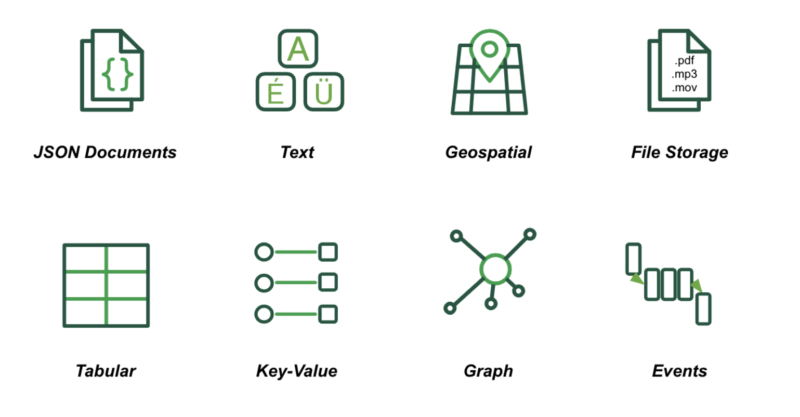
In contrast to the tables used by relational databases, MongoDB uses a JSON-based document data model. Thus, documents are a more natural way to represent data as a single structure with related data embedded as sub-documents and arrays collapses what is otherwise separated into parent-child tables linked by foreign keys in a relational database. You can model data in any way that your application demands – from rich, hierarchical documents through to flat, table-like structures, simple key-value pairs, text, geospatial data, and the nodes as well as edges used in graph processing.

Continue Reading

Processing Enterprise Data with Documents in MongoDB

Today’s enterprise organizations receive and process data from a variety of sources, including silos generated by web as well as mobile applications, social media, artificial intelligence solutions in addition to IoT sensors. That said, the efficient processing of this data at high volume in an enterprise setting is still a challenge for many organizations. 

Typical challenges include issues such as the integration of mainframe data with real-time IoT messages and hierarchical documents.
One of such issues being that enterprise data is not clean and might have contradicting characteristics as well as interpretations. This poses a challenge for many processes such as when integrating customers from multiple source systems.

Though, data cleansing could be considered as a solution to this problem. However, what if different data cleansing rules should be applied to the incoming data set? For example, because the basic assumption for “a single version of the truth” doesn’t exist in most enterprises. While one department might have a clear understanding of how the incoming data should be cleansed, another department, or an external party, might have another understanding. 

Continue Reading