search
0
Category

Artificial Intelligence

Orchestration of Agentic Workflows

The Shift from Prompts to Autonomous Systems

For years, organizations have focused on mastering “prompt engineering”, the art of writing precise instructions to extract useful outputs from Large Language Models (LLMs). While highly effective for simple, singular tasks, the prompt-based approach has inherent limitations when faced with complex, multi-step business problems.

The next paradigm shift in enterprise AI is the move toward Agentic Workflows.

An “Agent” is more than just an LLM. It is an autonomous or semi-autonomous system that combines reasoning capability (the LLM) with access to tools, memory, and the ability to act on its environment. Instead of answering a question, an agent performs a role, acting as an analyst, a software engineer, or a project manager, handling sequential professional tasks until a goal is achieved.

Orchestration of Agentic Workflows

Master the art of building multi-step autonomous systems by integrating the LangChain ecosystem with powerful tools like Zapier. This session provides a practical roadmap for evolving from simple prompts to sophisticated, coordinated architectures that execute complex professional tasks with ease. Learn more in our upcoming webinar on April 21st, 2026!

Watch Webinar Recording

Why Agents Require Orchestration

The premise of agentic workflows is powerful, but deployment is difficult. In a complex scenario, you may need a system to:

  1. Analyze a business request.
  2. Search a database.
  3. Process results.
  4. Consult a second specialized agent (e.g., a “Coder Agent”).
  5. Revise the plan based on output and finally provide a summary.

Without proper coordination, this series of steps breaks down. The model might hallucinate a tool execution, forget crucial data from step one by step four, or enter an endless loop of unhelpful actions.

Orchestration is the framework that manages this complexity. It is the conductor of the agentic orchestra, defining how different agents, tools, and memory systems interact, ensuring reliability, traceability, and successful execution of the business objective.

Anatomy of an Agentic Stack

To build a reliable orchestrator for autonomous systems, your architecture must unite three fundamental components:

  • Intelligence Layer (The Brain): The reasoning core, usually an LLM, capable of taking input, breaking it into smaller tasks, and evaluating progress.
  • Action Layer (The Tools): A library of external integrations, such as databases, web scrapers, computational engines, and business APIs, that the agent can use to gather real-world data or execute actions.
  • Coordination Layer (The Orchestrator): The logic that manages state, standardizes how agents exchange data, handles errors, and ensures loops are terminated when goals are met.

Tools of the Trade: Navigating the Lang Ecosystem

As organizations move from proof-of-concept to production, the ecosystem of framework tools is rapidly evolving. The “Lang” suite has emerged as a particularly dominant force in defining how agents are built and orchestrated. During our workshop, we will explore several critical tools within this stack:

LangChain

While often used for simple prompt channelling, LangChain’s core contribution to agentic architecture is standardizing integration and chain creation. It provides the interface to connect the LLM to dozens of external systems. Crucially, it allows us to define custom “tools” for the agent. These are specialized, user-created functions that give the agent specific capabilities, such as querying a proprietary data warehouse or executing an internal Python script. By wrapping these functions in LangChain’s tool abstraction, the agent can autonomously decide when and how to invoke them to solve complex problems.

LangGraph

Managing complex agentic workflows required a different mental model: graphs. LangGraph extends LangChain by allowing developers to model agentic flows as stateful graphs (DAGs, or Directed Acyclic Graphs). This is crucial for systems that require robust loops, cyclical processes, and complex state management, ensuring that “Agent A” always knows what state “Agent B” left the system in.

Langfuse

Orchestrating agents is messy, and you need visibility. While not officially developed by the creators of LangChain, Langfuse is an essential open-source operational companion that integrates seamlessly with the ecosystem. It provides a robust platform for debugging, testing, and monitoring agentic systems without vendor lock-in. Langfuse allows teams to “trace” the entire multi-step process, viewing every prompt, tool call, and internal decision, making it possible to identify bottlenecks, reduce costs, and debug failures in production.

Complementary Orchestration Tools

While the Lang ecosystem excels at managing LLM logic, a true enterprise solution often requires integration with generalized orchestration and automation tools (like Zapier or n8n). These tools excel at managing event triggers, parallel processes, and standard API interactions that do not require LLM reasoning, complementing the Lang stack in a complete enterprise architecture.

Final Thoughts

Moving from single prompts to coordinated, agentic systems is a necessary evolutionary step for organizations aiming to unlock true operational efficiency with AI. Mastery of these systems requires shifting your perspective from “engineering a prompt” to “engineering a system.”

Want to see how this works in practice?

This article provides a conceptual blueprint of agentic workflows and the essential role of orchestration. To gain hands-on experience in building these systems, we invite you to join our upcoming webinar on the Orchestration of Agentic Workflows. During the session, we will demonstrate how to build multi-step autonomous systems by integrating these platforms into a single architecture, providing a practical guide for moving from simple prompts to coordinated AI systems that handle professional tasks.

Register for free

– Hernan Revale (Scalefree)

Orchestration of Agentic Workflows

The Shift from Prompts to Autonomous Systems

For years, organizations have focused on mastering “prompt engineering”, the art of writing precise instructions to extract useful outputs from Large Language Models (LLMs). While highly effective for simple, singular tasks, the prompt-based approach has inherent limitations when faced with complex, multi-step business problems.

The next paradigm shift in enterprise AI is the move toward Agentic Workflows.

An “Agent” is more than just an LLM. It is an autonomous or semi-autonomous system that combines reasoning capability (the LLM) with access to tools, memory, and the ability to act on its environment. Instead of answering a question, an agent performs a role, acting as an analyst, a software engineer, or a project manager, handling sequential professional tasks until a goal is achieved.

Orchestration of Agentic Workflows

Master the art of building multi-step autonomous systems by integrating the LangChain ecosystem with powerful tools like Zapier. This session provides a practical roadmap for evolving from simple prompts to sophisticated, coordinated architectures that execute complex professional tasks with ease. Learn more in our upcoming webinar on April 21st, 2026!

Watch Webinar Recording

Why Agents Require Orchestration

The premise of agentic workflows is powerful, but deployment is difficult. In a complex scenario, you may need a system to:

  1. Analyze a business request.
  2. Search a database.
  3. Process results.
  4. Consult a second specialized agent (e.g., a “Coder Agent”).
  5. Revise the plan based on output and finally provide a summary.

Without proper coordination, this series of steps breaks down. The model might hallucinate a tool execution, forget crucial data from step one by step four, or enter an endless loop of unhelpful actions.

Orchestration is the framework that manages this complexity. It is the conductor of the agentic orchestra, defining how different agents, tools, and memory systems interact, ensuring reliability, traceability, and successful execution of the business objective.

Anatomy of an Agentic Stack

To build a reliable orchestrator for autonomous systems, your architecture must unite three fundamental components:

  • Intelligence Layer (The Brain): The reasoning core, usually an LLM, capable of taking input, breaking it into smaller tasks, and evaluating progress.
  • Action Layer (The Tools): A library of external integrations, such as databases, web scrapers, computational engines, and business APIs, that the agent can use to gather real-world data or execute actions.
  • Coordination Layer (The Orchestrator): The logic that manages state, standardizes how agents exchange data, handles errors, and ensures loops are terminated when goals are met.

Tools of the Trade: Navigating the Lang Ecosystem

As organizations move from proof-of-concept to production, the ecosystem of framework tools is rapidly evolving. The “Lang” suite has emerged as a particularly dominant force in defining how agents are built and orchestrated. During our workshop, we will explore several critical tools within this stack:

LangChain

While often used for simple prompt channelling, LangChain’s core contribution to agentic architecture is standardizing integration and chain creation. It provides the interface to connect the LLM to dozens of external systems. Crucially, it allows us to define custom “tools” for the agent. These are specialized, user-created functions that give the agent specific capabilities, such as querying a proprietary data warehouse or executing an internal Python script. By wrapping these functions in LangChain’s tool abstraction, the agent can autonomously decide when and how to invoke them to solve complex problems.

LangGraph

Managing complex agentic workflows required a different mental model: graphs. LangGraph extends LangChain by allowing developers to model agentic flows as stateful graphs (DAGs, or Directed Acyclic Graphs). This is crucial for systems that require robust loops, cyclical processes, and complex state management, ensuring that “Agent A” always knows what state “Agent B” left the system in.

Langfuse

Orchestrating agents is messy, and you need visibility. While not officially developed by the creators of LangChain, Langfuse is an essential open-source operational companion that integrates seamlessly with the ecosystem. It provides a robust platform for debugging, testing, and monitoring agentic systems without vendor lock-in. Langfuse allows teams to “trace” the entire multi-step process, viewing every prompt, tool call, and internal decision, making it possible to identify bottlenecks, reduce costs, and debug failures in production.

Complementary Orchestration Tools

While the Lang ecosystem excels at managing LLM logic, a true enterprise solution often requires integration with generalized orchestration and automation tools (like Zapier or n8n). These tools excel at managing event triggers, parallel processes, and standard API interactions that do not require LLM reasoning, complementing the Lang stack in a complete enterprise architecture.

Final Thoughts

Moving from single prompts to coordinated, agentic systems is a necessary evolutionary step for organizations aiming to unlock true operational efficiency with AI. Mastery of these systems requires shifting your perspective from “engineering a prompt” to “engineering a system.”

Want to see how this works in practice?

This article provides a conceptual blueprint of agentic workflows and the essential role of orchestration. To gain hands-on experience in building these systems, we invite you to join our upcoming webinar on the Orchestration of Agentic Workflows. During the session, we will demonstrate how to build multi-step autonomous systems by integrating these platforms into a single architecture, providing a practical guide for moving from simple prompts to coordinated AI systems that handle professional tasks.

Register for free

– Hernan Revale (Scalefree)

Predictive Analytics on the Modern Data Platform

Predictive Analytics on the Modern Data Warehouse

From BI to AI: Operationalizing Predictive Analytics where your Data already lives

Traditional Business Intelligence and reporting are incredibly good at telling what happened yesterday. How much revenue was generated last quarter? How many users logged in this week? But while understanding the past is important, today’s businesses need to know what will happen tomorrow.

This is where Predictive Analytics comes in. At its core, predictive analytics simply uses historical data to forecast future outcomes. Instead of asking how many customers canceled last month, predictive analytics asks:

“Which specific customers are most likely to cancel next week?”

Many organizations understand this value and eagerly hire data scientists to build these models. Yet, time and time again, these predictive initiatives fail to make it out of the PoC phase and into daily business operations because of how teams and data architectures are fundamentally structured.

Predictive Analytics on the Modern Data Platform

Learn how to bridge the gap between your data platform and actionable AI by building predictive models directly where your business data lives. This webinar covers practical strategies for transforming warehouse data into features, deploying models, and automating the flow of insights back into your daily operational workflows. Learn more in our upcoming webinar on March 17th, 2026!

Watch Webinar Recording

The Problem: The “Two Silos” of Data

In many companies, Data Engineering and Data Science exist in two entirely different worlds.

Data Engineers and Data Warehouse Developers spend their days building the Modern Data Platform. They carefully extract, clean, conform, and govern data from dozens of sources to create a “Single Source of Truth.” When a business analyst looks at a revenue dashboard, they know they can trust the numbers because the data platform enforces strict business logic.

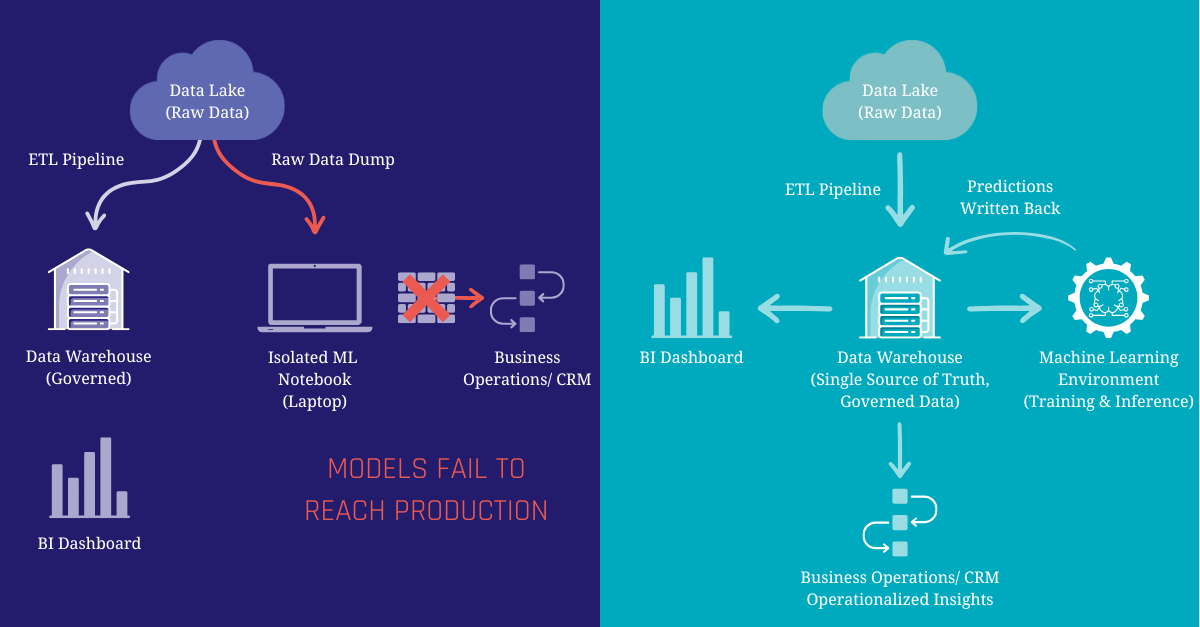
Data Scientists, on the other hand, often work in isolated environments like standalone Jupyter notebooks. Because they need massive amounts of data to train their machine learning models, they often bypass the data platform entirely, pulling raw, unstructured data directly from a data lake.

This disconnect creates some challenges:

  • Duplicated Effort: Data Scientists waste up to 80% of their time cleaning and prepping raw data, work the Data Engineering team has already done in the platform
  • Inconsistent Metrics: Because models are built on raw data, a model’s definition of “Active Customer” might completely contradict the official definition used by the in the data platform
  • The “Wall of Production”: A model might look perfectly accurate on a data scientist’s laptop, but because it relies on disconnected, ungoverned data pipelines, integrating its predictions back into the daily workflows of sales or support teams becomes an IT nightmare
  • Exclusivity: Data analysts are often limited to classic descriptive analytics which slows time-to-insight. The optimal solution is to democratize data science, empowering analysts to implement predictive use cases directly.

The Solution: Bring the Machine Learning to the Data

The fix to this problem requires a fundamental shift in how we think about machine learning architecture. Instead of moving data out of governed systems to feed external ML models, we need to bring the ML workflows more closer to the data.

By positioning the Modern Data Platform as the foundation for predictive analytics, you ensure that every prediction is built on the same trusted, cleansed, and governed business data used for your daily reporting. The Data Platform becomes the Feature Store, a centralized hub where data is prepared once and used everywhere, whether for a BI dashboard or training a predictive model.

Predictive Analytics on the Modern Data Warehouse

When the data platform serves as the single source of truth for both analysts and algorithms, magic happens. Data science teams stop wrestling with raw data pipelines, data engineering teams maintain governance, and the business gets predictions they can actually trust and operationalize.

Two Architecture Approaches

So, how do we actually bring the machine learning to the data? There isn’t a one-size-fits-all answer. Depending on the team’s skillset and the complexity of the models, there are typically one of two foundational patterns adopted:

Pattern 1: In-Warehouse Machine Learning (Democratizing ML)

Modern cloud data platforms have evolved beyond just storing and querying data, many now have machine learning engines built directly into them.

  • How it works: Using standard SQL, Data Analysts and Analytics Engineers can train, evaluate, and deploy models entirely inside the data platform (for example BigQuery ML, Snowflake Cortex or Databricks)
  • The Benefit: This radically democratizes predictive analytics. You don’t need to know Python or manage complex infrastructure to build a model. If you know SQL, you can generate predictions using the exact same tables you use for your BI dashboards
  • The Trade-off: While perfect for standard tasks like regression or classification, you are limited to the specific algorithms supported by the data platform

Pattern 2: The Data Platform as a Feature Store (The Hybrid Approach)

For organizations with dedicated Data Science teams building highly complex or custom models, the data platform takes on a different role: the Feature Store.

  • How it works: Data Scientists continue to work in their preferred external ML platforms (like Vertex AI, Databricks, or other). However, instead of pulling messy data from a data lake, they connect directly to the data platform to pull curated, business-approved data (“features”) for training
  • The Benefit: Data Scientists retain maximum flexibility to use advanced Python libraries and deep learning frameworks, while ensuring the models are trained on governed, accurate data
  • The Trade-off: It requires a bit more orchestration to manage the pipeline between the data platform and the ML platform, and ensuring predictions are accurately written back to the data platform
Architecture Feature Store

Example: Predicting Customer Churn

To understand the benefits of these approaches, let’s look at a classic business challenge: Customer Churn Prevention.

Imagine a SaaS company trying to figure out which customers are likely to cancel their subscriptions. In a siloed environment, predicting this is can be a messy, manual science project. But on a modern data platform, it becomes an automated operational workflow:

  1. The Foundation (Data): Because of the Data Engineering team’s work, the data platform already contains all necessary historical information of the customer. CRM data (company size), financial records (billing history), product logs (login frequency), and Zendesk tickets (recent complaints) are all cleaned, joined, and sitting in governed tables including a full history of changes
  2. The Prediction (Modeling): An analyst uses In-Warehouse ML (Pattern 1) to run a classification model against this historical data. The model identifies the hidden patterns of a churning customer and generates a “Churn Risk Score” between 0 and 100 for every active user
  3. The Operationalization (Action): This is the crucial step. The predictions aren’t left in a notebook. The risk scores are written directly back into a new table in the data platform. Through reverse-ETL, these scores can be automatically synced to the CRM as well as dashboards and reports can easily be built on top of the results.

Conclusion

Predictive analytics shouldn’t be an isolated science experiment. It should be a living, breathing part of your operational reality. By treating your modern data platform as the foundation for your machine learning workflows, you eliminate data silos, empower your analysts, and ensure your predictions are built on the trusted business data that matters most.

It is time to operationalize predictive insights where your business data already lives.

Want to see how this works in practice?

Join our upcoming webinar: Predictive Analytics on the Modern Data Platform. We will explore how to build and run predictive analytics directly on top of your data platform using trusted, governed business data as the foundation. You’ll learn practical patterns for turning warehouse models into features, training and deploying predictions, and integrating results back into reporting and operational workflows. Join me on March 17th.

Register for free

– Ole Bause (Scalefree)

Predictive Analytics on the Modern Data Platform

Predictive Analytics on the Modern Data Warehouse

From BI to AI: Operationalizing Predictive Analytics where your Data already lives

Traditional Business Intelligence and reporting are incredibly good at telling what happened yesterday. How much revenue was generated last quarter? How many users logged in this week? But while understanding the past is important, today’s businesses need to know what will happen tomorrow.

This is where Predictive Analytics comes in. At its core, predictive analytics simply uses historical data to forecast future outcomes. Instead of asking how many customers canceled last month, predictive analytics asks:

“Which specific customers are most likely to cancel next week?”

Many organizations understand this value and eagerly hire data scientists to build these models. Yet, time and time again, these predictive initiatives fail to make it out of the PoC phase and into daily business operations because of how teams and data architectures are fundamentally structured.

Predictive Analytics on the Modern Data Platform

Learn how to bridge the gap between your data platform and actionable AI by building predictive models directly where your business data lives. This webinar covers practical strategies for transforming warehouse data into features, deploying models, and automating the flow of insights back into your daily operational workflows. Learn more in our upcoming webinar on March 17th, 2026!

Watch Webinar Recording

The Problem: The “Two Silos” of Data

In many companies, Data Engineering and Data Science exist in two entirely different worlds.

Data Engineers and Data Warehouse Developers spend their days building the Modern Data Platform. They carefully extract, clean, conform, and govern data from dozens of sources to create a “Single Source of Truth.” When a business analyst looks at a revenue dashboard, they know they can trust the numbers because the data platform enforces strict business logic.

Data Scientists, on the other hand, often work in isolated environments like standalone Jupyter notebooks. Because they need massive amounts of data to train their machine learning models, they often bypass the data platform entirely, pulling raw, unstructured data directly from a data lake.

This disconnect creates some challenges:

  • Duplicated Effort: Data Scientists waste up to 80% of their time cleaning and prepping raw data, work the Data Engineering team has already done in the platform
  • Inconsistent Metrics: Because models are built on raw data, a model’s definition of “Active Customer” might completely contradict the official definition used by the in the data platform
  • The “Wall of Production”: A model might look perfectly accurate on a data scientist’s laptop, but because it relies on disconnected, ungoverned data pipelines, integrating its predictions back into the daily workflows of sales or support teams becomes an IT nightmare
  • Exclusivity: Data analysts are often limited to classic descriptive analytics which slows time-to-insight. The optimal solution is to democratize data science, empowering analysts to implement predictive use cases directly.

The Solution: Bring the Machine Learning to the Data

The fix to this problem requires a fundamental shift in how we think about machine learning architecture. Instead of moving data out of governed systems to feed external ML models, we need to bring the ML workflows more closer to the data.

By positioning the Modern Data Platform as the foundation for predictive analytics, you ensure that every prediction is built on the same trusted, cleansed, and governed business data used for your daily reporting. The Data Platform becomes the Feature Store, a centralized hub where data is prepared once and used everywhere, whether for a BI dashboard or training a predictive model.

Predictive Analytics on the Modern Data Warehouse

When the data platform serves as the single source of truth for both analysts and algorithms, magic happens. Data science teams stop wrestling with raw data pipelines, data engineering teams maintain governance, and the business gets predictions they can actually trust and operationalize.

Two Architecture Approaches

So, how do we actually bring the machine learning to the data? There isn’t a one-size-fits-all answer. Depending on the team’s skillset and the complexity of the models, there are typically one of two foundational patterns adopted:

Pattern 1: In-Warehouse Machine Learning (Democratizing ML)

Modern cloud data platforms have evolved beyond just storing and querying data, many now have machine learning engines built directly into them.

  • How it works: Using standard SQL, Data Analysts and Analytics Engineers can train, evaluate, and deploy models entirely inside the data platform (for example BigQuery ML, Snowflake Cortex or Databricks)
  • The Benefit: This radically democratizes predictive analytics. You don’t need to know Python or manage complex infrastructure to build a model. If you know SQL, you can generate predictions using the exact same tables you use for your BI dashboards
  • The Trade-off: While perfect for standard tasks like regression or classification, you are limited to the specific algorithms supported by the data platform

Pattern 2: The Data Platform as a Feature Store (The Hybrid Approach)

For organizations with dedicated Data Science teams building highly complex or custom models, the data platform takes on a different role: the Feature Store.

  • How it works: Data Scientists continue to work in their preferred external ML platforms (like Vertex AI, Databricks, or other). However, instead of pulling messy data from a data lake, they connect directly to the data platform to pull curated, business-approved data (“features”) for training
  • The Benefit: Data Scientists retain maximum flexibility to use advanced Python libraries and deep learning frameworks, while ensuring the models are trained on governed, accurate data
  • The Trade-off: It requires a bit more orchestration to manage the pipeline between the data platform and the ML platform, and ensuring predictions are accurately written back to the data platform
Architecture Feature Store

Example: Predicting Customer Churn

To understand the benefits of these approaches, let’s look at a classic business challenge: Customer Churn Prevention.

Imagine a SaaS company trying to figure out which customers are likely to cancel their subscriptions. In a siloed environment, predicting this is can be a messy, manual science project. But on a modern data platform, it becomes an automated operational workflow:

  1. The Foundation (Data): Because of the Data Engineering team’s work, the data platform already contains all necessary historical information of the customer. CRM data (company size), financial records (billing history), product logs (login frequency), and Zendesk tickets (recent complaints) are all cleaned, joined, and sitting in governed tables including a full history of changes
  2. The Prediction (Modeling): An analyst uses In-Warehouse ML (Pattern 1) to run a classification model against this historical data. The model identifies the hidden patterns of a churning customer and generates a “Churn Risk Score” between 0 and 100 for every active user
  3. The Operationalization (Action): This is the crucial step. The predictions aren’t left in a notebook. The risk scores are written directly back into a new table in the data platform. Through reverse-ETL, these scores can be automatically synced to the CRM as well as dashboards and reports can easily be built on top of the results.

Conclusion

Predictive analytics shouldn’t be an isolated science experiment. It should be a living, breathing part of your operational reality. By treating your modern data platform as the foundation for your machine learning workflows, you eliminate data silos, empower your analysts, and ensure your predictions are built on the trusted business data that matters most.

It is time to operationalize predictive insights where your business data already lives.

Want to see how this works in practice?

Join our upcoming webinar: Predictive Analytics on the Modern Data Platform. We will explore how to build and run predictive analytics directly on top of your data platform using trusted, governed business data as the foundation. You’ll learn practical patterns for turning warehouse models into features, training and deploying predictions, and integrating results back into reporting and operational workflows. Join me on March 17th.

Register for free

– Ole Bause (Scalefree)

The AI-Enabling Data Platform: Unlocking Scalable, High-Quality AI Applications

AI Enabling Data Platform

Is your company building an AI time bomb?

Many businesses are rushing to deploy AI prototypes that look impressive during a demo but hide massive, systemic risks. From “hallucinating” bots that give dangerous advice to customers to catastrophic legal liabilities, simple AI setups can quickly become a corporate nightmare.

If your AI strategy depends on unorganized data and ungoverned workflows, you aren’t just experimenting, you are creating a “data debt” that could bankrupt your project or compromise your company’s reputation. If you want to move beyond these risky experiments and build AI that is efficient, scalable, trusted, and actually works for your business, you need a different approach. Learn how an AI-Enabling Data Platform protects your company while unlocking the true power of high-quality, scalable AI.

The AI-enabling Data Platform – Unlocking high-quality AI Applications

To scale AI effectively, organizations must move beyond unmanaged prototypes toward an AI-Enabling Data Platform that addresses security risks and poor data governance. By transforming fragmented data into governed Feature Marts, this architecture ensures the high-quality, compliant data foundation necessary for reliable AI workflows. This shift ultimately solves the maintenance and liability issues that typically hinder AI return on investment. Learn more in our upcoming webinar on February 17th, 2026!

Watch Webinar Recording

Moving Beyond the Prototype

It usually starts with a spark of excitement. You build a small AI tool or workflow using a Large Language Model (LLM), and it works! It answers questions, summarizes text, and saves your team hours of manual labor. This is the “honeymoon phase,” where everything feels possible and the technology seems like magic.

But then, you try to scale. You move from a single user to a whole department, or from a small test folder to your entire company database. Suddenly, things get quite complex. The AI starts making mistakes it didn’t make before so you extend your AI workflows with data adjustments and exceptions, and the system starts breaking regularly. The legal team finds out about the project and starts asking difficult questions regarding data privacy and “black box” decision-making.

Does this sound familiar? You may have seen this in your own projects: A demo that looks great in a controlled environment but cannot handle the pressure of real, messy business use, and gets stuck in PoC purgatory. Without a professional foundation, your AI applications quickly change from being a business asset to becoming a massive liability.

Why Your Current AI Setup is Failing

To understand the solution, we must first look at why most AI initiatives fail when they leave the lab. The problem is almost always the same: a total lack of governance and messy (non-cleansed, non-standardized, or non-integrated) data.

While major LLM models are “trained” generally, they often lack access to the specific “facts” of your business in a way they can understand. This leads to several major threats:

  • The “Hallucination” Risk: If the AI isn’t connected to a “Single Source of Facts,” it guesses. It makes up facts about your product features, delivery times, or prices. In a business setting, a wrong answer isn’t just a mistake but a breach of trust that can quickly destroy a customer relationship.
  • The Maintenance Nightmare: Without a central data platform, every time your source data structure or business logic changes, you have to manually update every single AI tool and workflow you’ve built that touches this piece of data. This makes long-term maintenance impossible and kills the hoped-for ROI of your new AI application.
  • The Legal Challenge: Legal frameworks don’t magically disappear when working with AI. Furthermore, additional frameworks like the EU AI Act are adding new layers of regulatory compliance requirements. If you cannot explain why your AI gave a specific answer or which data it used, you could face massive fines. Using sensitive data without a clear audit trail is a gamble most companies cannot afford.

The Two Traps of Modern AI Development

After the honeymoon phase of the LLM era, companies want to adapt quickly. However, they almost always fall into one of two typical traps. You might recognize these patterns in your own organization:

Trap 1: The “AI Spaghetti” Trap

In the rush to be “AI-First,” many teams use a mix of different AI workflow tools and agents, connecting them piece-by-piece to solve individual problems. While each piece works, the overall system becomes a tangled mess, which I like to call AI Spaghetti. 

In this trap, there is no central “brain” or data control. Each agent has its own way of looking at data, leading to zero consistency. If you change a price in your main database, some agents might see it, while others are still using an old PDF they found in a different folder.

This “spaghetti” is impossible to maintain, secure, and scale. You spend 90% of your time fixing broken connections, integrations or calculations instead of creating new value. 

The dangerous part is that this doesn’t happen on day one; it builds itself as you add more functionalities and exceptions. Often, these workflows are already in production as they grow, and the only way out is building everything from scratch the right way while maintaining the spaghetti in parallel making the “escape route” quite expensive.

Trap 2: The “Lone Wolf” Liability Trap

To bypass what they see as “slow corporate IT,” some teams or individuals start building their own AI applications and workflows. This is not inherently concerning for basic operational efficiency, but the trap is found when teams go deeper and start building workflows and applications consuming and transforming bigger junks of company data.

These “Lone Wolves” work around IT and expose the company to major risks to quickly “get the job done,” ignoring necessary governance processes. When a Lone Wolf uploads a customer list or a trade secret to a public model, that data might be used to train future versions of the model, making your secrets public property. Furthermore, with zero oversight, legal frameworks like GDPR, internal data sharing protocols, and IT security are often ignored.

The Solution: The AI-Enabling Data Platform

To escape these traps and unlock real sustainable value, you must move away from “messy” setups. The answer is the AI-Enabling Data Platform. This is not just a place to store data. It is a professional system that transforms raw, fragmented information into high-quality “fuel” for AI.

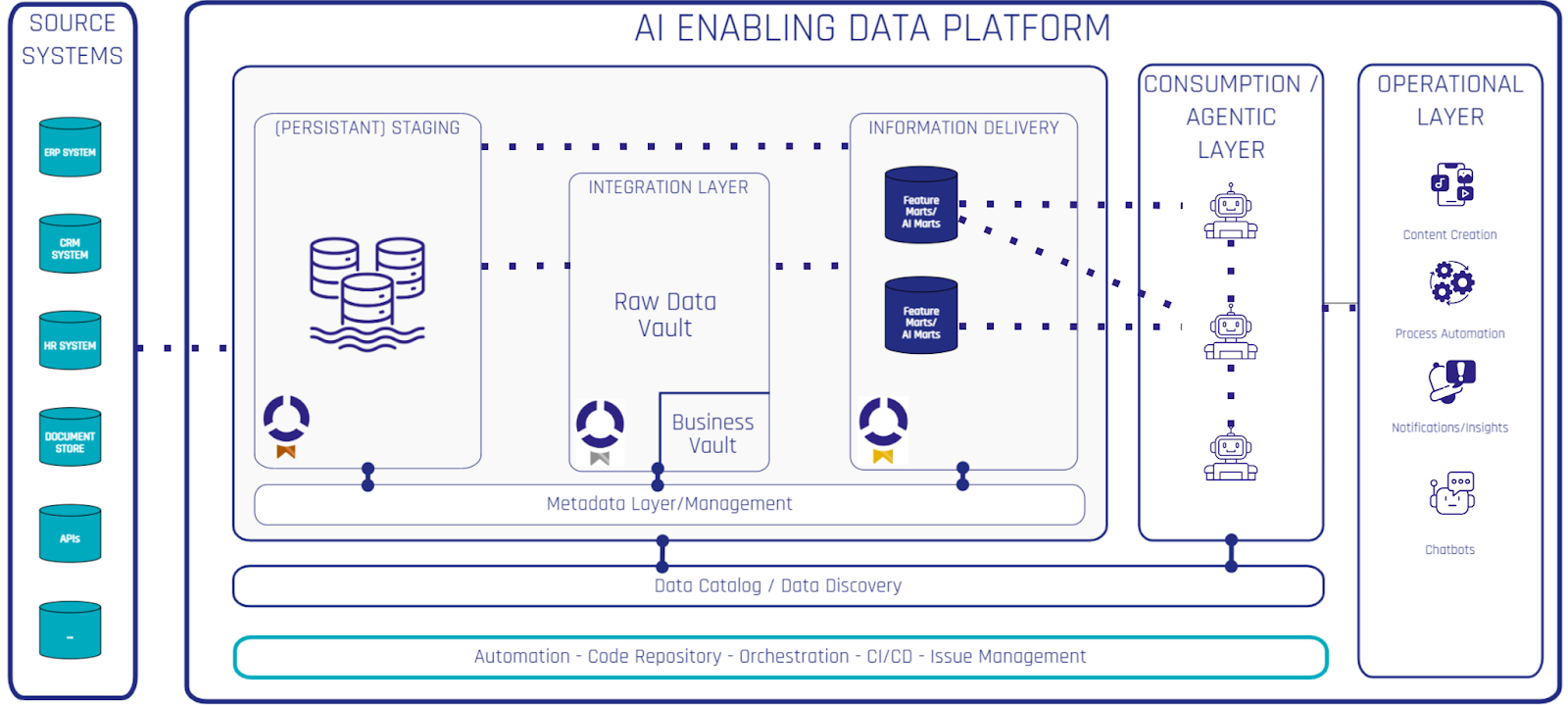
The platform acts as a protective layer between your messy company data (emails, databases, PDFs, spreadsheets) and your AI applications. Its main job is to provide Feature Marts.

What are Feature Marts?

Think of a Feature Mart as a library of trusted information. Instead of asking the AI to search through a giant, messy database, you provide it with specific “Features”, which essentially are data points that have been cleaned, integrated, and approved by your data experts.

For example, instead of the AI trying to guess a customer’s loyalty status from thousands of raw interaction logs, it simply asks the Feature Mart for the “Customer_Loyalty_Score.” The result is instant, accurate, and governed.

How do they fit into our data architecture?

This is aligned with how we provide data to business users for standard reporting and analytics. We don’t throw non-integrated, uncleaned data without descriptions at business users and ask them to find the perfect KPI. This is why the principles behind a quality data platform stay mostly the same. You can simply build Feature Marts on top of your existing data platform. Instead of “Information Marts,” you now add Feature Marts.

AI Enabling Data Platform

You build feature marts on top of your integrated data layer as part of your “Gold Layer” as it is a data asset ready for consumption by your AI applications, workflows and agents. Those are responsible for automating your operations supporting your business in a variety of tasks.

What becomes critical for high-quality results is a semantic layer. Nowadays, definitions for your data, calculations, and meaning can be added in modern data cataloging tools. These are excellent as they can be used by business users as well as data specialists. A well-constructed Feature Mart, combined with descriptive data, is the perfect recipe for high-quality results from your AI layer.

If you are interested in more details about the data architecture, check out my article about Data Fabric architecture here: Data Vault, Data Mesh & Data Fabric Guide

What You Achieve: Quality, Speed, Cost Efficiency and Trust

When you invest in an AI-Enabling Data Platform, you achieve four critical business outcomes:

AI Enabling Data Platform Key Points

The Path to Success

Building high-quality AI is a journey. You can achieve better results and avoid the risks by following these steps:

  • Stop the “Lone Wolves”: Ensure all major AI projects use a central data platform so they stay safe and governed. Which AI usage is allowed outside IT and where guardrails are necessary should be defined in your organization’s AI strategy.
  • Stop the “AI Spaghetti”: Simple AI use cases can be achieved with basic workflow tools (e.g., n8n, Zapier) without a dedicated platform. Complex AI use cases building on company data should not and only use workflows tools for orchestration. 
  • Build Feature Marts: Don’t just give the AI raw data. Turn your important business data into ready-to-use “features” to increase trust, speed, security and governance.
  • Focus on Governance: Use the platform to control who (and which AI) can see your data. Audit inputs and outputs to ensure quality stays high.
  • Create Cross-functional Teams: The real impact is in automating everyday business processes, which is best achieved through combined teams of data engineers, AI engineers, and business users.
  • Assess and Plan: Get an overview of how AI is currently used, where the biggest risks are, and where the biggest opportunities lie. Create a roadmap including team structure, team skills, architecture, processes, governance and security.

If you want to profit from external expertise, read about our Scalefree Review & Assessment service and reach out to us for a customized review fitting your exact needs.

Conclusion: Real Value is Built on Trust

The AI revolution is not about who has the most expensive model or the flashiest chatbot. It is about who can automate their business most efficiently leveraging AI without losing trust in operations, results, and decisions.
When your AI applications are accurate, safe, and governed, they stop being “risky experiments” and become the engine of your company’s success.
Start by identifying your “Lone Wolves” and bringing them into a governed environment. Look at your most valuable AI use cases and start building the Feature Marts they need to survive in the real world.

What do you think?

Have you seen the “Agentic Spaghetti” trap in your own company? Are you worried about “Lone Wolves” creating legal risks? I would love to hear your experiences and challenges in the comments below or on social media postings (probably only LinkedIn)!

Januar 29, 2026

AI Enabling Data Platform

Is your company building an AI time bomb?

Many businesses are rushing to deploy AI prototypes that look impressive during a demo but hide massive, systemic risks. From “hallucinating” bots that give dangerous advice to customers to catastrophic legal liabilities, simple AI setups can quickly become a corporate nightmare.

If your AI strategy depends on unorganized data and ungoverned workflows, you aren’t just experimenting, you are creating a “data debt” that could bankrupt your project or compromise your company’s reputation. If you want to move beyond these risky experiments and build AI that is efficient, scalable, trusted, and actually works for your business, you need a different approach. Learn how an AI-Enabling Data Platform protects your company while unlocking the true power of high-quality, scalable AI.

The AI-enabling Data Platform – Unlocking high-quality AI Applications

To scale AI effectively, organizations must move beyond unmanaged prototypes toward an AI-Enabling Data Platform that addresses security risks and poor data governance. By transforming fragmented data into governed Feature Marts, this architecture ensures the high-quality, compliant data foundation necessary for reliable AI workflows. This shift ultimately solves the maintenance and liability issues that typically hinder AI return on investment. Learn more in our upcoming webinar on February 17th, 2026!

Webinar-Aufzeichnung ansehen

Moving Beyond the Prototype

It usually starts with a spark of excitement. You build a small AI tool or workflow using a Large Language Model (LLM), and it works! It answers questions, summarizes text, and saves your team hours of manual labor. This is the “honeymoon phase,” where everything feels possible and the technology seems like magic.

But then, you try to scale. You move from a single user to a whole department, or from a small test folder to your entire company database. Suddenly, things get quite complex. The AI starts making mistakes it didn’t make before so you extend your AI workflows with data adjustments and exceptions, and the system starts breaking regularly. The legal team finds out about the project and starts asking difficult questions regarding data privacy and “black box” decision-making.

Does this sound familiar? You may have seen this in your own projects: A demo that looks great in a controlled environment but cannot handle the pressure of real, messy business use, and gets stuck in PoC purgatory. Without a professional foundation, your AI applications quickly change from being a business asset to becoming a massive liability.

Why Your Current AI Setup is Failing

To understand the solution, we must first look at why most AI initiatives fail when they leave the lab. The problem is almost always the same: a total lack of governance and messy (non-cleansed, non-standardized, or non-integrated) data.

While major LLM models are “trained” generally, they often lack access to the specific “facts” of your business in a way they can understand. This leads to several major threats:

  • The “Hallucination” Risk: If the AI isn’t connected to a “Single Source of Facts,” it guesses. It makes up facts about your product features, delivery times, or prices. In a business setting, a wrong answer isn’t just a mistake but a breach of trust that can quickly destroy a customer relationship.
  • The Maintenance Nightmare: Without a central data platform, every time your source data structure or business logic changes, you have to manually update every single AI tool and workflow you’ve built that touches this piece of data. This makes long-term maintenance impossible and kills the hoped-for ROI of your new AI application.
  • The Legal Challenge: Legal frameworks don’t magically disappear when working with AI. Furthermore, additional frameworks like the EU AI Act are adding new layers of regulatory compliance requirements. If you cannot explain why your AI gave a specific answer or which data it used, you could face massive fines. Using sensitive data without a clear audit trail is a gamble most companies cannot afford.

The Two Traps of Modern AI Development

After the honeymoon phase of the LLM era, companies want to adapt quickly. However, they almost always fall into one of two typical traps. You might recognize these patterns in your own organization:

Trap 1: The “AI Spaghetti” Trap

In the rush to be “AI-First,” many teams use a mix of different AI workflow tools and agents, connecting them piece-by-piece to solve individual problems. While each piece works, the overall system becomes a tangled mess, which I like to call AI Spaghetti. 

In this trap, there is no central “brain” or data control. Each agent has its own way of looking at data, leading to zero consistency. If you change a price in your main database, some agents might see it, while others are still using an old PDF they found in a different folder.

This “spaghetti” is impossible to maintain, secure, and scale. You spend 90% of your time fixing broken connections, integrations or calculations instead of creating new value. 

The dangerous part is that this doesn’t happen on day one; it builds itself as you add more functionalities and exceptions. Often, these workflows are already in production as they grow, and the only way out is building everything from scratch the right way while maintaining the spaghetti in parallel making the “escape route” quite expensive.

Trap 2: The “Lone Wolf” Liability Trap

To bypass what they see as “slow corporate IT,” some teams or individuals start building their own AI applications and workflows. This is not inherently concerning for basic operational efficiency, but the trap is found when teams go deeper and start building workflows and applications consuming and transforming bigger junks of company data.

These “Lone Wolves” work around IT and expose the company to major risks to quickly “get the job done,” ignoring necessary governance processes. When a Lone Wolf uploads a customer list or a trade secret to a public model, that data might be used to train future versions of the model, making your secrets public property. Furthermore, with zero oversight, legal frameworks like GDPR, internal data sharing protocols, and IT security are often ignored.

The Solution: The AI-Enabling Data Platform

To escape these traps and unlock real sustainable value, you must move away from “messy” setups. The answer is the AI-Enabling Data Platform. This is not just a place to store data. It is a professional system that transforms raw, fragmented information into high-quality “fuel” for AI.

The platform acts as a protective layer between your messy company data (emails, databases, PDFs, spreadsheets) and your AI applications. Its main job is to provide Feature Marts.

What are Feature Marts?

Think of a Feature Mart as a library of trusted information. Instead of asking the AI to search through a giant, messy database, you provide it with specific “Features”, which essentially are data points that have been cleaned, integrated, and approved by your data experts.

For example, instead of the AI trying to guess a customer’s loyalty status from thousands of raw interaction logs, it simply asks the Feature Mart for the “Customer_Loyalty_Score.” The result is instant, accurate, and governed.

How do they fit into our data architecture?

This is aligned with how we provide data to business users for standard reporting and analytics. We don’t throw non-integrated, uncleaned data without descriptions at business users and ask them to find the perfect KPI. This is why the principles behind a quality data platform stay mostly the same. You can simply build Feature Marts on top of your existing data platform. Instead of “Information Marts,” you now add Feature Marts.

AI Enabling Data Platform

You build feature marts on top of your integrated data layer as part of your “Gold Layer” as it is a data asset ready for consumption by your AI applications, workflows and agents. Those are responsible for automating your operations supporting your business in a variety of tasks.

What becomes critical for high-quality results is a semantic layer. Nowadays, definitions for your data, calculations, and meaning can be added in modern data cataloging tools. These are excellent as they can be used by business users as well as data specialists. A well-constructed Feature Mart, combined with descriptive data, is the perfect recipe for high-quality results from your AI layer.

If you are interested in more details about the data architecture, check out my article about Data Fabric architecture here: Data Vault, Data Mesh & Data Fabric Guide

What You Achieve: Quality, Speed, Cost Efficiency and Trust

When you invest in an AI-Enabling Data Platform, you achieve four critical business outcomes:

AI Enabling Data Platform Key Points

The Path to Success

Building high-quality AI is a journey. You can achieve better results and avoid the risks by following these steps:

  • Stop the “Lone Wolves”: Ensure all major AI projects use a central data platform so they stay safe and governed. Which AI usage is allowed outside IT and where guardrails are necessary should be defined in your organization’s AI strategy.
  • Stop the “AI Spaghetti”: Simple AI use cases can be achieved with basic workflow tools (e.g., n8n, Zapier) without a dedicated platform. Complex AI use cases building on company data should not and only use workflows tools for orchestration. 
  • Build Feature Marts: Don’t just give the AI raw data. Turn your important business data into ready-to-use “features” to increase trust, speed, security and governance.
  • Focus on Governance: Use the platform to control who (and which AI) can see your data. Audit inputs and outputs to ensure quality stays high.
  • Create Cross-functional Teams: The real impact is in automating everyday business processes, which is best achieved through combined teams of data engineers, AI engineers, and business users.
  • Assess and Plan: Get an overview of how AI is currently used, where the biggest risks are, and where the biggest opportunities lie. Create a roadmap including team structure, team skills, architecture, processes, governance and security.

If you want to profit from external expertise, read about our Scalefree Review & Assessment service and reach out to us for a customized review fitting your exact needs.

Conclusion: Real Value is Built on Trust

The AI revolution is not about who has the most expensive model or the flashiest chatbot. It is about who can automate their business most efficiently leveraging AI without losing trust in operations, results, and decisions.
When your AI applications are accurate, safe, and governed, they stop being “risky experiments” and become the engine of your company’s success.
Start by identifying your “Lone Wolves” and bringing them into a governed environment. Look at your most valuable AI use cases and start building the Feature Marts they need to survive in the real world.

What do you think?

Have you seen the “Agentic Spaghetti” trap in your own company? Are you worried about “Lone Wolves” creating legal risks? I would love to hear your experiences and challenges in the comments below or on social media postings (probably only LinkedIn)!

How to Get Your Data Platform Ready for Agentic AI

AI Agent Anatomy

Not long ago, simple large language models were the pinnacle of AI. Today, they can feel almost rudimentary, as the domain of artificial intelligence is rapidly evolves. Lately, we are seeing a push trying to move beyond one-off prompts and towards AI agents. 

It only makes sense that businesses are eager to incorporate AI agents into their workflows, and one domain particularly primed for such transformation is the data team. AI agents can automate repetitive tasks, streamline operations, and enhance data analysis and allow data professionals to focus more on the business side.

Future-Proofing your Data Platform and Unlocking its value as an AI Asset

Many companies investing in enterprise AI find success is limited by the quality of their data platforms. A key issue is “architectural debt,” which hinders the performance and scalability of AI initiatives. This session will provide guidance on how to identify and address these architectural challenges, helping organizations transform their data platforms into reliable assets that support AI agent workflows. Register for our free webinar, October 21st, 2025!

Watch Webinar Recording

AI Agents: A Brief Introduction

AI agents are autonomous software systems that perceive their environment, reason over data, and take actions to achieve specified goals. They leverage large language models, tool‑use frameworks, and API integrations to connect with external services from CRM platforms and cloud storage to data platforms and real‑time event streams. Unlike static models, agents can maintain memory across sessions, chain multiple model calls, and adapt their workflows based on real‑time feedback from connected systems.

The Anatomy of AI Agents

AI Agent Anatomy

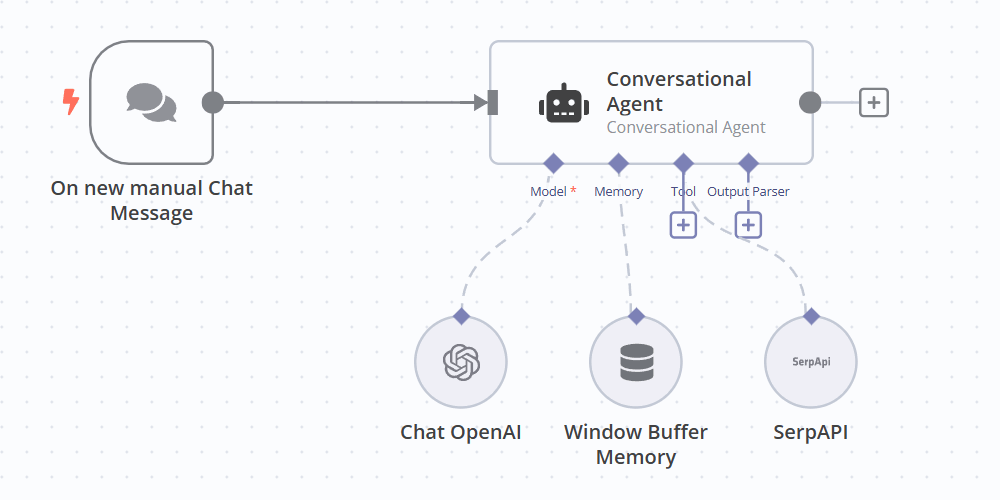
Figure 1: A conversation agent built in low-code automation tool n8n.

An AI agent is typically centered around a large language model that serves as its core reasoning engine, interpreting user inputs, generating plans, and orchestrating decision-making through chain-of-thought or self-prompting techniques​. Surrounding this core is a memory structure that can span across immediate working memory, episodic logs, and semantic knowledge stores that persistently captures and condenses interaction histories​. To provide durable, structured storage and enable symbolic multi-hop reasoning, agents integrate databases (e.g., SQL, graph, or vector stores) as their internal memory substrate, issuing queries to organize, link, and evolve knowledge beyond the context window of the LLM​. Finally, AI agents orchestrate a suite of external tools ranging from RESTful APIs and code execution environments to web scrapers and domain-specific plugins to act upon the world, extend their cognitive reach, and execute actions in both digital and physical domains​.

A key limitation of relying on custom APIs as connectors in an AI agent framework is scalability: as you add more agents, tools, and integrations, maintaining a separate API connection for every tool and action soon becomes unmanageable. That’s where MCPs come in.

Model Context Protocols (MCP)

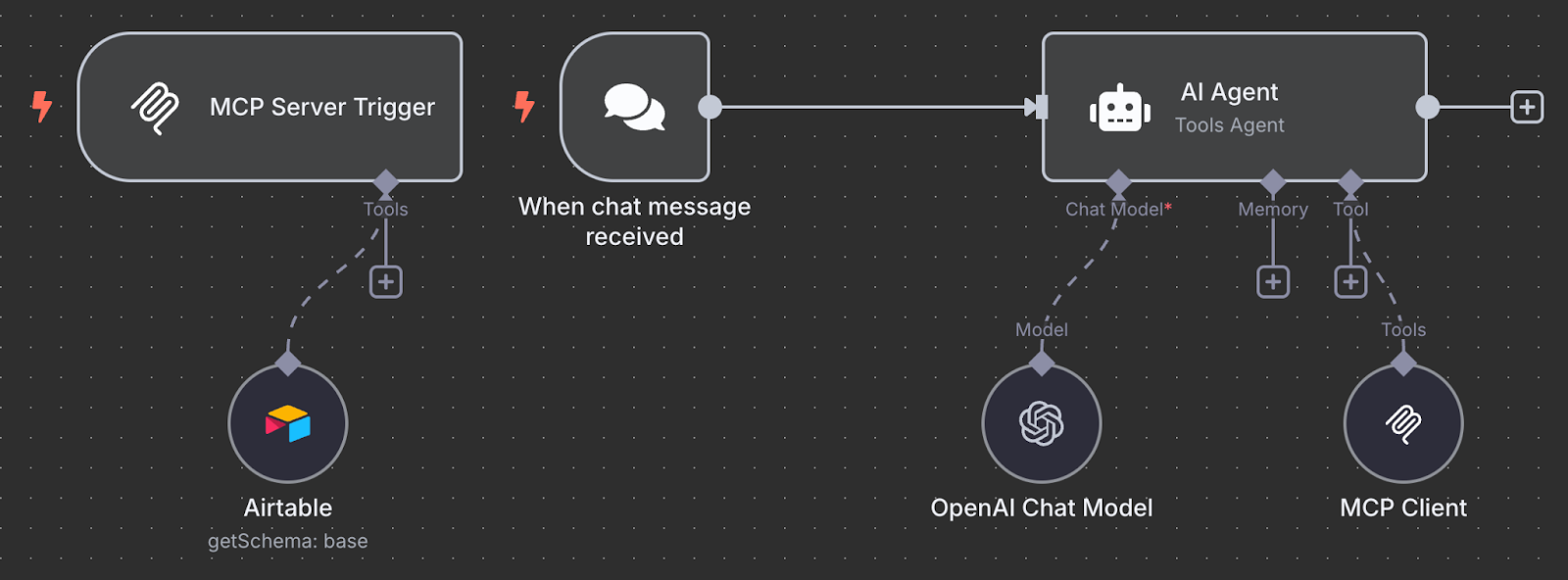
Figure 2: A diagram showcasing Model Context Protocols (MCP)

Developed by Anthropic and open-sourced in November 2024, the Model Context Protocol (MCP) functions as a standardized integration layer that enables the reasoning engine to interface with external resources​. It accomplishes this by defining a uniform client–server protocol whereby MCP clients (the AI agents) discover available services via a registry, authenticate, and invoke capabilities such as database queries, function calls, or file retrieval through RESTful endpoints​. By decoupling the LLM from tool-specific protocols, MCP fosters a modular ecosystem in which new services can be plugged in dynamically, making AI agent development much more scalable.

Build a Solid Data Foundation for Agentic AI

Enterprises that aim to integrate AI agents into their data workloads must first build a solid data foundation. According to a cybersecurity report, 72% of professionals state that IT and security data are siloed within their organizations, creating corporate misalignment and increased security risks. Likewise, an industry study found that in three out of four companies, data silos hinder internal collaboration, and more than 40% report a growing number of such silos. 

When data remains in isolated, non-integrated environments, AI agents cannot establish a holistic overview of the data landscape of an enterprise, hence severely limiting its abilities in making meaningful impact.

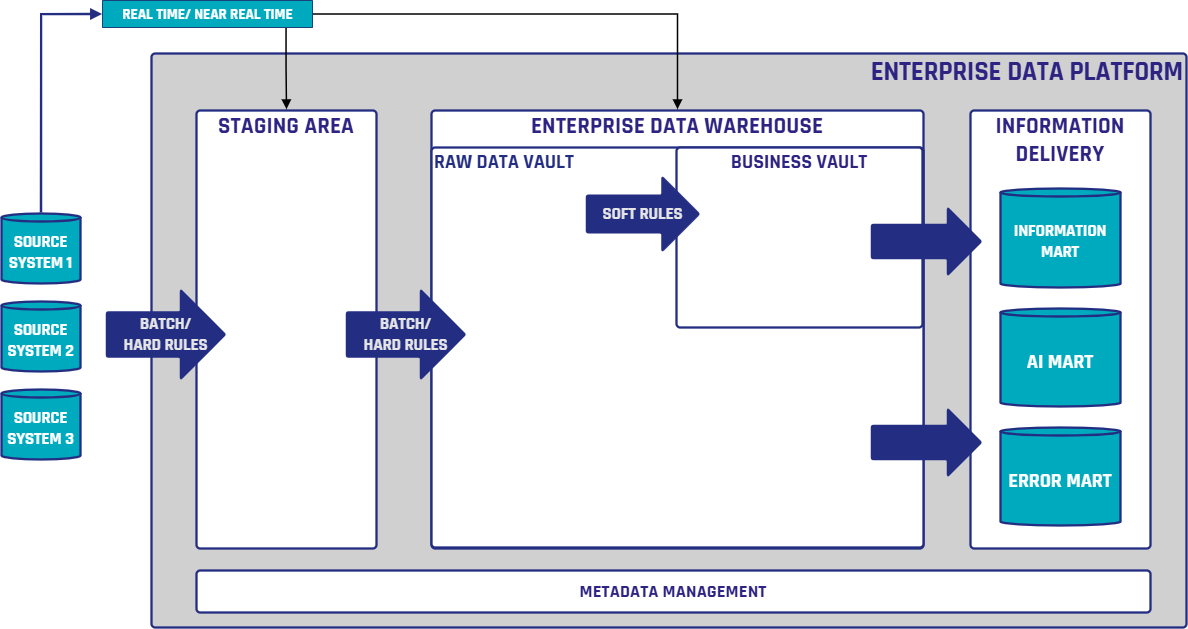
AI Agent Enterprise Data Platform

Figure 3: An Enterprise Data Platform diagram, with an EDW

To overcome this, it is best to unify data sources into an enterprise data warehouse (EDW). The EDW must provide both current and historical data in a single data platform. By functioning as a true EDW, the data platform provides a single source of facts for all agents and analytics engines. This means that the AI agents across the enterprise are empowered to create what is needed with the increased availability of data. At Scalefree, we believe that a robust and well-designed data model is foundational to building a scalable and resilient EDW, that supports both operational efficiency and long-term analytical agility.

Ensure Data Quality and Metadata Management

Data quality is already a key issue in data warehousing. Poor data quality can lead to inaccurate insights, flawed decision-making, and ultimately compromise business success. The effectiveness of AI agents is also directly influenced by the quality of the data they consume. Issues such as duplicate records, missing values, and inconsistent schemas can result in erroneous behavior or reduced performance. These issues can be addressed through systematic data cleaning processes and the implementation of data quality tests across ingestion and transformation pipelines. Ongoing monitoring should be in place to detect anomalies and trigger remediation actions where necessary. 

Metadata management also plays a role in agent effectiveness. Shared taxonomies and ontologies provide agents with a consistent framework for understanding data definitions across domains. Without standardized metadata, agents may cause errors in reasoning or communication due to misinterpreted values. Establishing a well-maintained data catalog and promoting organization-wide metadata standards supports both data discoverability and semantic consistency, which are essential in multi-agent environments.

Prepare for Real-Time Processing and Efficient Retrieval

AI agents do not strictly require real-time data, but having access to it can significantly enhance their performance and decision-making capabilities. Real-time data allows AI agents to be informed in quickly changing conditions and provide more accurate and relevant responses. To support this, data platforms can be set up to process streaming data or near-real-time updates.

Additionally, indexing strategies must accommodate both structured and unstructured data. When needed, structured data can continue to rely on traditional indexing methods such as inverted indexes. For unstructured content, embedding-based vector search provides agents with the means to identify semantically similar data points.

Large data objects should also be broken into manageable segments through chunking. This practice enables agents to retrieve and reason over smaller, contextually meaningful portions of data, which improves both performance and interpretability. Determining appropriate chunk sizes may require tuning to balance context with precision.

Implement Orchestration and Observability for AI Workflows

The introduction of AI agents into business processes necessitates a layer of orchestration that governs how agents collaborate, pass information, and handle dependencies. A multi-agent orchestration system should trigger the right agents for a given task, coordinate their outputs, and manage error handling or fallback logic. Orchestrators also need to support asynchronous communication where agents operate independently but contribute to a shared goal.

Monitoring and testing these workflows is essential. Agents can fail, drift from intended behavior, or interact in unintended ways. Logging, alerting, and automated feedback loops can be integrated into orchestration frameworks to surface and correct such deviations. Performance metrics such as response time, accuracy, and success rates should be tracked to ensure continued alignment with business objectives.

AI Agents as Identity-Bearing Entities

AI agents should be treated as identity-bearing entities within the enterprise architecture. This means granting them access only to the data and systems necessary for their assigned roles. To that end, just as any other employee, AI agents should abide by the principle of least privilege. Role-Based Access Control ensures that each agent’s data permissions are explicitly defined and enforceable. For example, an AI agent responsible for financial forecasting should not have access to sensitive HR data.

Integrating AI agents into existing identity and access management (IAM) systems can help enforce compliance and support auditability. Just as human users have roles and access policies, agents should be provisioned, monitored, and offboarded in a controlled and traceable manner.

Embrace a Data Mesh for Scalable Multi-Agent Workflows

Organizations expecting to deploy multiple AI agents concurrently should consider transitioning from a centralized end-to-end model to a data mesh. A data mesh distributes data ownership across domain teams and treats data as a product, aligning well with the modular nature of AI agents. This architecture allows agents to scale horizontally across business functions while maintaining domain-specific ownership of data pipelines and logic. Each agent can operate on a defined domain without depending on a centralized data engineering team, reducing bottlenecks and increasing agility. In environments with high agent interaction, domain-driven decentralization ensures that systems remain responsive and maintainable as usage grows.

Design for Modularity and Scalability

To scale the use of AI agents across business processes, data pipelines should be decomposed into independently deployable and maintainable components. This approach allows new agents or features to be added without having to duplicate or fork existing systems. Event-driven architectures, in which agents react to messages or state changes, support this level of decoupling and flexibility.

Agent-to-agent communication should be standardized using standardized protocols and contracts to allow agent-to-agent interaction predictably. By designing systems with modular interfaces and reusable components, AI agent ecosystems can grow in an agile, iterative fashion.

How to Get Your Data Platform Ready for Agentic AI

AI Agent Anatomy

Not long ago, simple large language models were the pinnacle of AI. Today, they can feel almost rudimentary, as the domain of artificial intelligence is rapidly evolves. Lately, we are seeing a push trying to move beyond one-off prompts and towards AI agents. 

It only makes sense that businesses are eager to incorporate AI agents into their workflows, and one domain particularly primed for such transformation is the data team. AI agents can automate repetitive tasks, streamline operations, and enhance data analysis and allow data professionals to focus more on the business side.

Future-Proofing your Data Platform and Unlocking its value as an AI Asset

Many companies investing in enterprise AI find success is limited by the quality of their data platforms. A key issue is “architectural debt,” which hinders the performance and scalability of AI initiatives. This session will provide guidance on how to identify and address these architectural challenges, helping organizations transform their data platforms into reliable assets that support AI agent workflows. Register for our free webinar, October 21st, 2025!

Watch Webinar Recording

AI Agents: A Brief Introduction

AI agents are autonomous software systems that perceive their environment, reason over data, and take actions to achieve specified goals. They leverage large language models, tool‑use frameworks, and API integrations to connect with external services from CRM platforms and cloud storage to data platforms and real‑time event streams. Unlike static models, agents can maintain memory across sessions, chain multiple model calls, and adapt their workflows based on real‑time feedback from connected systems.

The Anatomy of AI Agents

AI Agent Anatomy

Figure 1: A conversation agent built in low-code automation tool n8n.

An AI agent is typically centered around a large language model that serves as its core reasoning engine, interpreting user inputs, generating plans, and orchestrating decision-making through chain-of-thought or self-prompting techniques​. Surrounding this core is a memory structure that can span across immediate working memory, episodic logs, and semantic knowledge stores that persistently captures and condenses interaction histories​. To provide durable, structured storage and enable symbolic multi-hop reasoning, agents integrate databases (e.g., SQL, graph, or vector stores) as their internal memory substrate, issuing queries to organize, link, and evolve knowledge beyond the context window of the LLM​. Finally, AI agents orchestrate a suite of external tools ranging from RESTful APIs and code execution environments to web scrapers and domain-specific plugins to act upon the world, extend their cognitive reach, and execute actions in both digital and physical domains​.

A key limitation of relying on custom APIs as connectors in an AI agent framework is scalability: as you add more agents, tools, and integrations, maintaining a separate API connection for every tool and action soon becomes unmanageable. That’s where MCPs come in.

Model Context Protocols (MCP)

Figure 2: A diagram showcasing Model Context Protocols (MCP)

Developed by Anthropic and open-sourced in November 2024, the Model Context Protocol (MCP) functions as a standardized integration layer that enables the reasoning engine to interface with external resources​. It accomplishes this by defining a uniform client–server protocol whereby MCP clients (the AI agents) discover available services via a registry, authenticate, and invoke capabilities such as database queries, function calls, or file retrieval through RESTful endpoints​. By decoupling the LLM from tool-specific protocols, MCP fosters a modular ecosystem in which new services can be plugged in dynamically, making AI agent development much more scalable.

Build a Solid Data Foundation for Agentic AI

Enterprises that aim to integrate AI agents into their data workloads must first build a solid data foundation. According to a cybersecurity report, 72% of professionals state that IT and security data are siloed within their organizations, creating corporate misalignment and increased security risks. Likewise, an industry study found that in three out of four companies, data silos hinder internal collaboration, and more than 40% report a growing number of such silos. 

When data remains in isolated, non-integrated environments, AI agents cannot establish a holistic overview of the data landscape of an enterprise, hence severely limiting its abilities in making meaningful impact.

AI Agent Enterprise Data Platform

Figure 3: An Enterprise Data Platform diagram, with an EDW

To overcome this, it is best to unify data sources into an enterprise data warehouse (EDW). The EDW must provide both current and historical data in a single data platform. By functioning as a true EDW, the data platform provides a single source of facts for all agents and analytics engines. This means that the AI agents across the enterprise are empowered to create what is needed with the increased availability of data. At Scalefree, we believe that a robust and well-designed data model is foundational to building a scalable and resilient EDW, that supports both operational efficiency and long-term analytical agility.

Ensure Data Quality and Metadata Management

Data quality is already a key issue in data warehousing. Poor data quality can lead to inaccurate insights, flawed decision-making, and ultimately compromise business success. The effectiveness of AI agents is also directly influenced by the quality of the data they consume. Issues such as duplicate records, missing values, and inconsistent schemas can result in erroneous behavior or reduced performance. These issues can be addressed through systematic data cleaning processes and the implementation of data quality tests across ingestion and transformation pipelines. Ongoing monitoring should be in place to detect anomalies and trigger remediation actions where necessary. 

Metadata management also plays a role in agent effectiveness. Shared taxonomies and ontologies provide agents with a consistent framework for understanding data definitions across domains. Without standardized metadata, agents may cause errors in reasoning or communication due to misinterpreted values. Establishing a well-maintained data catalog and promoting organization-wide metadata standards supports both data discoverability and semantic consistency, which are essential in multi-agent environments.

Prepare for Real-Time Processing and Efficient Retrieval

AI agents do not strictly require real-time data, but having access to it can significantly enhance their performance and decision-making capabilities. Real-time data allows AI agents to be informed in quickly changing conditions and provide more accurate and relevant responses. To support this, data platforms can be set up to process streaming data or near-real-time updates.

Additionally, indexing strategies must accommodate both structured and unstructured data. When needed, structured data can continue to rely on traditional indexing methods such as inverted indexes. For unstructured content, embedding-based vector search provides agents with the means to identify semantically similar data points.

Large data objects should also be broken into manageable segments through chunking. This practice enables agents to retrieve and reason over smaller, contextually meaningful portions of data, which improves both performance and interpretability. Determining appropriate chunk sizes may require tuning to balance context with precision.

Implement Orchestration and Observability for AI Workflows

The introduction of AI agents into business processes necessitates a layer of orchestration that governs how agents collaborate, pass information, and handle dependencies. A multi-agent orchestration system should trigger the right agents for a given task, coordinate their outputs, and manage error handling or fallback logic. Orchestrators also need to support asynchronous communication where agents operate independently but contribute to a shared goal.

Monitoring and testing these workflows is essential. Agents can fail, drift from intended behavior, or interact in unintended ways. Logging, alerting, and automated feedback loops can be integrated into orchestration frameworks to surface and correct such deviations. Performance metrics such as response time, accuracy, and success rates should be tracked to ensure continued alignment with business objectives.

AI Agents as Identity-Bearing Entities

AI agents should be treated as identity-bearing entities within the enterprise architecture. This means granting them access only to the data and systems necessary for their assigned roles. To that end, just as any other employee, AI agents should abide by the principle of least privilege. Role-Based Access Control ensures that each agent’s data permissions are explicitly defined and enforceable. For example, an AI agent responsible for financial forecasting should not have access to sensitive HR data.

Integrating AI agents into existing identity and access management (IAM) systems can help enforce compliance and support auditability. Just as human users have roles and access policies, agents should be provisioned, monitored, and offboarded in a controlled and traceable manner.

Embrace a Data Mesh for Scalable Multi-Agent Workflows

Organizations expecting to deploy multiple AI agents concurrently should consider transitioning from a centralized end-to-end model to a data mesh. A data mesh distributes data ownership across domain teams and treats data as a product, aligning well with the modular nature of AI agents. This architecture allows agents to scale horizontally across business functions while maintaining domain-specific ownership of data pipelines and logic. Each agent can operate on a defined domain without depending on a centralized data engineering team, reducing bottlenecks and increasing agility. In environments with high agent interaction, domain-driven decentralization ensures that systems remain responsive and maintainable as usage grows.

Design for Modularity and Scalability

To scale the use of AI agents across business processes, data pipelines should be decomposed into independently deployable and maintainable components. This approach allows new agents or features to be added without having to duplicate or fork existing systems. Event-driven architectures, in which agents react to messages or state changes, support this level of decoupling and flexibility.

Agent-to-agent communication should be standardized using standardized protocols and contracts to allow agent-to-agent interaction predictably. By designing systems with modular interfaces and reusable components, AI agent ecosystems can grow in an agile, iterative fashion.

Unlock the Intelligence Layer: LLMs in Data Warehousing and the Future of Your Data

Natural Language AI Model

“Stop writing complex SQL, start talking to your data?”

This provocative question highlights a growing shift in how we interact with data. For years, getting answers from a Data Warehouse meant writing SQL queries or relying on pre-built dashboards.

For many organizations, their data platforms remain underutilized because accessing insights still requires writing code or navigating complex dashboards. It’s time to go beyond static reports and unlock a true intelligence layer on top of your data warehouse. Recent advances in Large Language Models (LLMs) and Natural Language Processing (NLP) are making data warehouses smarter, faster, and easier to use for everyone. In this article, we’ll explore how LLMs can transform the way you interact with your data – from using plain English queries instead of SQL, to AI-driven discovery of hidden insights, to enriching your data pipelines – and why this shift represents the future of data analytics.

Unlock the Intelligence Layer: LLMs in Data Warehousing and the Future of your Data

Unlock your data warehouse’s full potential! This webinar reveals how Large Language Models and Natural Language Processing are transforming data interaction, empowering everyone to effortlessly translate plain language into SQL, enable AI-driven data discovery, and deliver actionable insights to every stakeholder. Register for our free webinar, August 12th, 2025!

Watch Webinar Recording

From Complex SQL to Conversational Queries

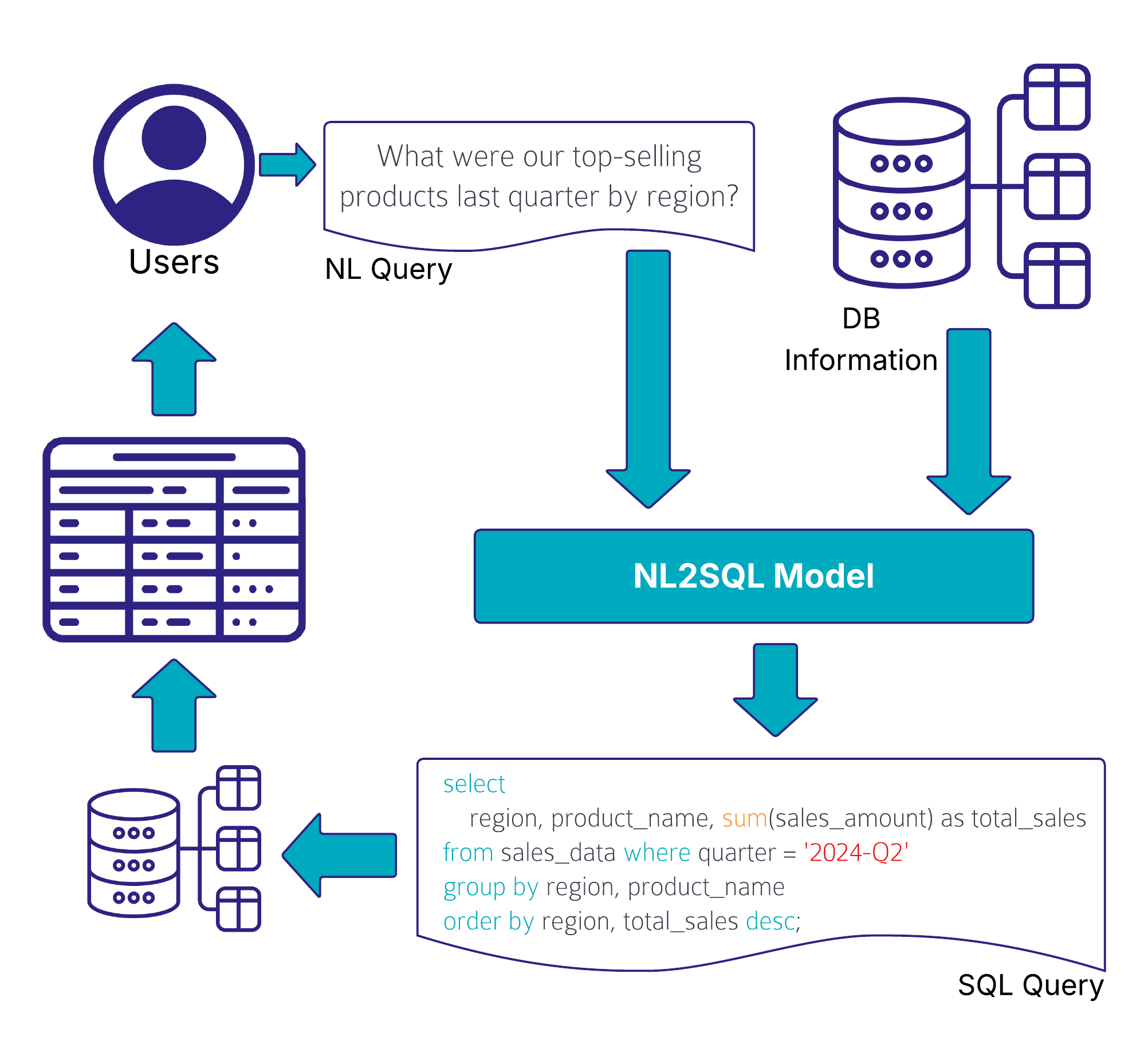
Business users often depend on data engineers or analysts to fetch answers, creating bottlenecks in decision-making. Even data professionals themselves spend considerable time writing and optimizing SQL, rather than interpreting results. What if anyone could simply ask the data warehouse a question in plain language and get the answer? This is the promise of LLMs as an “intelligence layer”, a layer that bridges complex datasets and human comprehension. Advanced LLMs can understand a user’s question or request and generate the appropriate SQL queries on the fly.

This technology (often called Text-to-SQL or Natural-Language-to-SQL or NL2SQL) has rapidly evolved and major technology players have already taken note. For example, Databricks introduced a Natural Language Query feature (LakehouseIQ) to let users ask questions of their Lakehouse, and Snowflake is also exploring LLM-driven query capabilities.

Imagine asking your data warehouse in plain English: “What were our top-selling products last quarter by region?”. This text input is passed into a LLM, often enriched by company-specific data via RAG and then the system translates that into a correct, optimized SQL query that retrieves the answer.

Natural Language AI Model

Of course, translating natural language to SQL at an enterprise scale isn’t trivial. Complex schemas, ambiguous user input, and security considerations mean the LLM has to be both smart and careful. Uber has built such an AI system that works on an enterprise scale level.

Uber’s QueryGPT is an NL2SQL system that uses a multi-step, RAG-based pipeline combining LLMs with retrieval and agent modules. It fetches context via similarity search over a vector database of example queries and schema information for SQL generation. To manage Uber’s vast data ecosystem, QueryGPT employs specialized agents:

  • an Intent Agent classifies requests by business domain
  • a Table Agent suggests tables for the query
  • a Column Prune Agent trims irrelevant columns to reduce prompt length. The LLM then produces the SQL query and an explanation.

This layered design allows QueryGPT to handle large schemas and reliably generate complex multi-table queries. It’s a hybrid architecture where multiple transformer calls specialize in sub-tasks, enabling scalable, accurate NL2SQL as a production service, saving thousands of Uber employees significant time by mid-2024.

AI-Augmented Data Discovery and Insights

Beyond simply fetching results for user queries, LLMs can augment data discovery by revealing insights that users might not have explicitly asked for. Traditional dashboards show you what is happening, but a smart LLM-based system can tell you why it’s happening and highlight patterns you might not notice. This is often called augmented analytics – using AI to automatically find important correlations, trends, outliers, and drivers in your data.

LLMs excel at interpreting data outputs and providing additional context. For example, rather than just displaying a chart or a table, an LLM can generate a written summary pointing out key trends or anomalies. They can explain which metrics are up or down and suggest potential reasons (for instance, detecting that “conversion rates dipped in July, possibly due to seasonality or inventory issues”), enabling quicker and more informed decision-making.

Another area where LLMs can significantly reduce manual effort is in the creation and maintenance of data catalogs. Documenting data models, table structures, and especially individual column descriptions is often time-consuming and easily skipped due to missing resources, despite being crucial for an effective use and accessibility of the data. LLMs can automate large parts of this process by generating descriptions based on data profiling, SQL logic, naming conventions, and metadata.

dbt Cloud has recently released their dbt Copilot AI Agent that supports the developer in various ways, for example by letting the AI analyzing the SQL code and schema metadata to automatically generate model and column descriptions.

LLMs in Your Data Pipeline: Enrichment and Efficiency

LLMs don’t just enhance how users interact with the Data Warehouse; they can also improve the data itself and the efficiency of data engineering processes. In modern ELT (Extract-Load-Transform) pipelines, a lot of time is spent cleaning, enriching, and preparing data for analysis. Here, LLMs offer new tools to automate and augment these steps.

One promising use case is the semantic enrichment of data. Large Language Models have absorbed a vast amount of world knowledge and language patterns, and they can use that to fill gaps or add context to your raw data. For example, imagine you have a dataset of customer feedback where each entry is a text comment. An LLM could automatically classify the sentiment of each comment (positive/negative), extract key themes, or even generate a summary of common issues. In this way, unstructured data becomes structured insights without manual effort. The image below illustrates how an LLM is integrated into a data pipeline: text inputs from a CustomerFeedback table are passed to an OpenAI API endpoint, where the model returns structured sentiment labels that are then stored back in the database.

Large Language Models Sentiment Analysis

In a practical case study, LLMs were used to enrich an academic dataset by inferring missing attributes (like guessing a person’s gender from their name with high accuracy), which outperformed dedicated API services. This showcases how LLMs can bring external knowledge and reasoning to enhance your data.

Another area is metadata enrichment and semantic enrichment of unstructured data. Enterprise data is often filled with cryptic column names and jargon that prevents usability. LLMs can intelligently expand abbreviations and annotate fields with business-friendly descriptions. For instance, an LLM-driven catalog might take a column labeled “CUST_ID” and annotate it as “Customer Identifier, unique ID for each customer record”.

LLMs can also assist in the coding and transformation process itself. Data engineers can leverage LLMs to generate boilerplate code or SQL for transformations, document pipeline logic in plain English, or even detect anomalies and data quality issues through pattern analysis. By automating tedious parts of data preparation and providing AI-generated suggestions, LLMs free up engineers to focus on higher-level architecture and problem-solving.

Conclusion

While the promise of an LLM-powered intelligence layer is exciting, it’s important to approach it with a clear strategy. Successful implementation requires considering a few key challenges and best practices. Data quality and governance are more crucial than ever. If your underlying data is inaccurate or poorly structured, the AI’s answers will be unreliable. As the saying goes, “garbage in, garbage out.”

Ensuring clean, well-organized data (and maintaining a robust data governance program) will help the LLM produce meaningful and correct insights. Additionally, organizations may need to fine-tune or configure their LLMs to understand industry-specific terminology or business context. This reduces the chance of the AI misinterpreting what a user asks or generating an incorrect query.

Privacy and security are another important consideration. If your data includes sensitive information, you must ensure that any AI tool accessing it complies with your security requirements. This might involve using self-hosted models or secure APIs, and setting up proper access controls.

The dream of a self-service analytics experience: “just talk to the data and get answers” is quickly becoming a reality. This evolution may redefine roles (enabling analysts and engineers alike to focus on higher-value tasks) and open up analytics to a wider audience than ever before. It’s an exciting time to be a data professional, but also one that demands staying informed and ready to adapt.

– Ole Bause (Scalefree)

Unlock the Intelligence Layer: LLMs in Data Warehousing and the Future of Your Data

Natural Language AI Model

“Stop writing complex SQL, start talking to your data?”

This provocative question highlights a growing shift in how we interact with data. For years, getting answers from a Data Warehouse meant writing SQL queries or relying on pre-built dashboards.

For many organizations, their data platforms remain underutilized because accessing insights still requires writing code or navigating complex dashboards. It’s time to go beyond static reports and unlock a true intelligence layer on top of your data warehouse. Recent advances in Large Language Models (LLMs) and Natural Language Processing (NLP) are making data warehouses smarter, faster, and easier to use for everyone. In this article, we’ll explore how LLMs can transform the way you interact with your data – from using plain English queries instead of SQL, to AI-driven discovery of hidden insights, to enriching your data pipelines – and why this shift represents the future of data analytics.

Unlock the Intelligence Layer: LLMs in Data Warehousing and the Future of your Data

Unlock your data warehouse’s full potential! This webinar reveals how Large Language Models and Natural Language Processing are transforming data interaction, empowering everyone to effortlessly translate plain language into SQL, enable AI-driven data discovery, and deliver actionable insights to every stakeholder. Register for our free webinar, August 12th, 2025!

Watch Webinar Recording

From Complex SQL to Conversational Queries

Business users often depend on data engineers or analysts to fetch answers, creating bottlenecks in decision-making. Even data professionals themselves spend considerable time writing and optimizing SQL, rather than interpreting results. What if anyone could simply ask the data warehouse a question in plain language and get the answer? This is the promise of LLMs as an “intelligence layer”, a layer that bridges complex datasets and human comprehension. Advanced LLMs can understand a user’s question or request and generate the appropriate SQL queries on the fly.

This technology (often called Text-to-SQL or Natural-Language-to-SQL or NL2SQL) has rapidly evolved and major technology players have already taken note. For example, Databricks introduced a Natural Language Query feature (LakehouseIQ) to let users ask questions of their Lakehouse, and Snowflake is also exploring LLM-driven query capabilities.

Imagine asking your data warehouse in plain English: “What were our top-selling products last quarter by region?”. This text input is passed into a LLM, often enriched by company-specific data via RAG and then the system translates that into a correct, optimized SQL query that retrieves the answer.

Natural Language AI Model

Of course, translating natural language to SQL at an enterprise scale isn’t trivial. Complex schemas, ambiguous user input, and security considerations mean the LLM has to be both smart and careful. Uber has built such an AI system that works on an enterprise scale level.

Uber’s QueryGPT is an NL2SQL system that uses a multi-step, RAG-based pipeline combining LLMs with retrieval and agent modules. It fetches context via similarity search over a vector database of example queries and schema information for SQL generation. To manage Uber’s vast data ecosystem, QueryGPT employs specialized agents:

  • an Intent Agent classifies requests by business domain
  • a Table Agent suggests tables for the query
  • a Column Prune Agent trims irrelevant columns to reduce prompt length. The LLM then produces the SQL query and an explanation.

This layered design allows QueryGPT to handle large schemas and reliably generate complex multi-table queries. It’s a hybrid architecture where multiple transformer calls specialize in sub-tasks, enabling scalable, accurate NL2SQL as a production service, saving thousands of Uber employees significant time by mid-2024.

AI-Augmented Data Discovery and Insights

Beyond simply fetching results for user queries, LLMs can augment data discovery by revealing insights that users might not have explicitly asked for. Traditional dashboards show you what is happening, but a smart LLM-based system can tell you why it’s happening and highlight patterns you might not notice. This is often called augmented analytics – using AI to automatically find important correlations, trends, outliers, and drivers in your data.

LLMs excel at interpreting data outputs and providing additional context. For example, rather than just displaying a chart or a table, an LLM can generate a written summary pointing out key trends or anomalies. They can explain which metrics are up or down and suggest potential reasons (for instance, detecting that “conversion rates dipped in July, possibly due to seasonality or inventory issues”), enabling quicker and more informed decision-making.

Another area where LLMs can significantly reduce manual effort is in the creation and maintenance of data catalogs. Documenting data models, table structures, and especially individual column descriptions is often time-consuming and easily skipped due to missing resources, despite being crucial for an effective use and accessibility of the data. LLMs can automate large parts of this process by generating descriptions based on data profiling, SQL logic, naming conventions, and metadata.

dbt Cloud has recently released their dbt Copilot AI Agent that supports the developer in various ways, for example by letting the AI analyzing the SQL code and schema metadata to automatically generate model and column descriptions.

LLMs in Your Data Pipeline: Enrichment and Efficiency

LLMs don’t just enhance how users interact with the Data Warehouse; they can also improve the data itself and the efficiency of data engineering processes. In modern ELT (Extract-Load-Transform) pipelines, a lot of time is spent cleaning, enriching, and preparing data for analysis. Here, LLMs offer new tools to automate and augment these steps.

One promising use case is the semantic enrichment of data. Large Language Models have absorbed a vast amount of world knowledge and language patterns, and they can use that to fill gaps or add context to your raw data. For example, imagine you have a dataset of customer feedback where each entry is a text comment. An LLM could automatically classify the sentiment of each comment (positive/negative), extract key themes, or even generate a summary of common issues. In this way, unstructured data becomes structured insights without manual effort. The image below illustrates how an LLM is integrated into a data pipeline: text inputs from a CustomerFeedback table are passed to an OpenAI API endpoint, where the model returns structured sentiment labels that are then stored back in the database.

Large Language Models Sentiment Analysis

In a practical case study, LLMs were used to enrich an academic dataset by inferring missing attributes (like guessing a person’s gender from their name with high accuracy), which outperformed dedicated API services. This showcases how LLMs can bring external knowledge and reasoning to enhance your data.

Another area is metadata enrichment and semantic enrichment of unstructured data. Enterprise data is often filled with cryptic column names and jargon that prevents usability. LLMs can intelligently expand abbreviations and annotate fields with business-friendly descriptions. For instance, an LLM-driven catalog might take a column labeled “CUST_ID” and annotate it as “Customer Identifier, unique ID for each customer record”.

LLMs can also assist in the coding and transformation process itself. Data engineers can leverage LLMs to generate boilerplate code or SQL for transformations, document pipeline logic in plain English, or even detect anomalies and data quality issues through pattern analysis. By automating tedious parts of data preparation and providing AI-generated suggestions, LLMs free up engineers to focus on higher-level architecture and problem-solving.

Conclusion

While the promise of an LLM-powered intelligence layer is exciting, it’s important to approach it with a clear strategy. Successful implementation requires considering a few key challenges and best practices. Data quality and governance are more crucial than ever. If your underlying data is inaccurate or poorly structured, the AI’s answers will be unreliable. As the saying goes, “garbage in, garbage out.”

Ensuring clean, well-organized data (and maintaining a robust data governance program) will help the LLM produce meaningful and correct insights. Additionally, organizations may need to fine-tune or configure their LLMs to understand industry-specific terminology or business context. This reduces the chance of the AI misinterpreting what a user asks or generating an incorrect query.

Privacy and security are another important consideration. If your data includes sensitive information, you must ensure that any AI tool accessing it complies with your security requirements. This might involve using self-hosted models or secure APIs, and setting up proper access controls.

The dream of a self-service analytics experience: “just talk to the data and get answers” is quickly becoming a reality. This evolution may redefine roles (enabling analysts and engineers alike to focus on higher-value tasks) and open up analytics to a wider audience than ever before. It’s an exciting time to be a data professional, but also one that demands staying informed and ready to adapt.

– Ole Bause (Scalefree)

Building Responsible AI Systems Under the EU AI Act

EU AI Act Responsible Systems

The EU Artificial Intelligence (AI) Act represents a significant step forward in regulating AI technologies across the European Union. Its purpose is to establish a unified legal framework, ensuring human rights protection, safety, and the ethical use of AI, while fostering innovation and accountability. With its phased implementation starting in 2024, the Act brings major changes to how AI systems are designed, deployed, and monitored.


Overview of the EU AI Act

The EU AI Act aims to:

  • Establish a unified legal framework for AI across the EU.
  • Protect human rights and ensure safety.
  • Prohibit harmful and unethical uses of AI.
  • Promote transparency and accountability in AI systems.
  • Foster innovation and technological growth.

Timeline for Implementation

The Act includes specific deadlines for compliance:

  • August 2024: Prohibited AI practices must stop immediately.
  • August 2025: Transparency rules for general-purpose AI, including content labeling, take effect.
  • August 2026: High-risk AI regulations, such as those in healthcare, become enforceable with strict data quality standards.

Why This Matters

AI adoption is growing rapidly, with 42% of organizations utilizing AI in 2023—a 7% increase from 2022. The EU AI Act not only imposes penalties of up to 7% of global turnover for non-compliance but also reflects a societal responsibility to use AI ethically, addressing inequalities and safeguarding future generations.

The Risk-Based Approach

The EU AI Act categorizes AI systems into four risk levels:

  • Unacceptable Risk: Prohibited under Article 5.
  • High Risk: Strict regulation and obligations under Articles 6-51.
  • Limited Risk: Providers regulated under Articles 52a-52e.
  • Minimal Risk: Subject to transparency obligations under Article 52.

Key Principles of Responsible AI

Building responsible AI systems involves adhering to several key principles:

  • Explainability: AI models should be transparent and easy to understand.
  • Bias & Fairness: Detect and mitigate biases to ensure equitable outcomes.
  • Accountability: Define responsibilities for AI outcomes clearly.
  • Data Suitability: Use appropriate, high-quality data in compliance with regulations.
  • Monitoring: Continuously track AI performance to ensure reliability.
  • Transparency: Disclose system functionalities clearly and provide user mechanisms for feedback.
  • Auditability: Maintain detailed logs of algorithms, datasets, and configurations.

Steps to Build Responsible AI Systems

Organizations can prepare for compliance and ethical AI usage through the following steps:

  • Implement scalable AI services.
  • Develop predictive reporting mechanisms.
  • Establish robust governance frameworks.
  • Leverage tools and platforms for AI development.
  • Ensure data suitability and compliance.

AI Marts: Enabling AI Act Compliance

Traditional machine learning workflows without centralized data management can lead to feature inconsistencies, operational complexity, and compliance issues. AI Marts address these challenges by providing:

  • Centralized feature management.
  • Integration of feature engineering into workflows and pipelines.
  • Metadata and version control.
  • Scalable feature serving across targets.
  • Comprehensive logs for governance and auditing.

Benefits: AI Marts enhance data governance and security, serving as a critical step towards compliance with the EU AI Act.

Conclusion

As AI adoption grows, compliance with the EU AI Act is essential for organizations aiming to use AI responsibly. By implementing risk-based strategies, embracing transparency, and leveraging tools like AI Marts, companies can align with regulatory requirements while fostering trust and innovation.

Watch the Video

Building Responsible AI Systems Under the EU AI Act

EU AI Act Responsible Systems

The EU Artificial Intelligence (AI) Act represents a significant step forward in regulating AI technologies across the European Union. Its purpose is to establish a unified legal framework, ensuring human rights protection, safety, and the ethical use of AI, while fostering innovation and accountability. With its phased implementation starting in 2024, the Act brings major changes to how AI systems are designed, deployed, and monitored.


Overview of the EU AI Act

The EU AI Act aims to:

  • Establish a unified legal framework for AI across the EU.
  • Protect human rights and ensure safety.
  • Prohibit harmful and unethical uses of AI.
  • Promote transparency and accountability in AI systems.
  • Foster innovation and technological growth.

Timeline for Implementation

The Act includes specific deadlines for compliance:

  • August 2024: Prohibited AI practices must stop immediately.
  • August 2025: Transparency rules for general-purpose AI, including content labeling, take effect.
  • August 2026: High-risk AI regulations, such as those in healthcare, become enforceable with strict data quality standards.

Why This Matters

AI adoption is growing rapidly, with 42% of organizations utilizing AI in 2023—a 7% increase from 2022. The EU AI Act not only imposes penalties of up to 7% of global turnover for non-compliance but also reflects a societal responsibility to use AI ethically, addressing inequalities and safeguarding future generations.

The Risk-Based Approach

The EU AI Act categorizes AI systems into four risk levels:

  • Unacceptable Risk: Prohibited under Article 5.
  • High Risk: Strict regulation and obligations under Articles 6-51.
  • Limited Risk: Providers regulated under Articles 52a-52e.
  • Minimal Risk: Subject to transparency obligations under Article 52.

Key Principles of Responsible AI

Building responsible AI systems involves adhering to several key principles:

  • Explainability: AI models should be transparent and easy to understand.
  • Bias & Fairness: Detect and mitigate biases to ensure equitable outcomes.
  • Accountability: Define responsibilities for AI outcomes clearly.
  • Data Suitability: Use appropriate, high-quality data in compliance with regulations.
  • Monitoring: Continuously track AI performance to ensure reliability.
  • Transparency: Disclose system functionalities clearly and provide user mechanisms for feedback.
  • Auditability: Maintain detailed logs of algorithms, datasets, and configurations.

Steps to Build Responsible AI Systems

Organizations can prepare for compliance and ethical AI usage through the following steps:

  • Implement scalable AI services.
  • Develop predictive reporting mechanisms.
  • Establish robust governance frameworks.
  • Leverage tools and platforms for AI development.
  • Ensure data suitability and compliance.

AI Marts: Enabling AI Act Compliance

Traditional machine learning workflows without centralized data management can lead to feature inconsistencies, operational complexity, and compliance issues. AI Marts address these challenges by providing:

  • Centralized feature management.
  • Integration of feature engineering into workflows and pipelines.
  • Metadata and version control.
  • Scalable feature serving across targets.
  • Comprehensive logs for governance and auditing.

Benefits: AI Marts enhance data governance and security, serving as a critical step towards compliance with the EU AI Act.

Conclusion

As AI adoption grows, compliance with the EU AI Act is essential for organizations aiming to use AI responsibly. By implementing risk-based strategies, embracing transparency, and leveraging tools like AI Marts, companies can align with regulatory requirements while fostering trust and innovation.

Watch the Video

Close Menu